What is Spiritual Abuse?
One of the best quotes describing spiritual abuse comes from legendary trauma psychologist and spiritual abuse expert, Diane Langberg.
“Two words that should never go together: spiritual and abuse. It’s a diabolical pairing. Spiritual abuse involves using the sacred to harm or deceive the soul of another.” (1)
Yikes. This is probably why the preferred or popular term used in mainstream Christianity is “church hurt.” At least that’s the term I heard most often at the two mega churches I attended between 1998-2023. When “church hurt” was discussed in those churches, the primary context was focused on creating a friendly and hospitable environment for those coming into our church “carrying church hurt.” It was implied that “people with church hurt” had been hurt by someone at that church and they were holding onto the hurt of that experience, so they might have a hard time trusting the people in this church. Well, then my family was harmed in this church and I rapidly realized the trouble with the phrase “church hurt,” but more on that another time.
For now, we need to call the experiences what they are: spiritual abuse.
But what is spiritual abuse? I’m glad you asked. We’re about to get to it. However, prepare your heart now; even the experts in this field are still trying to come to a general consensus on the definition of spiritual abuse. For this reason, I will provide you with several descriptions or definitions presented by the brave pioneers (researchers, authors, therapists) boldly dipping their toe—or diving head first—into the waters of spiritual abuse.
David Johnson & Jeff Van Vonderen
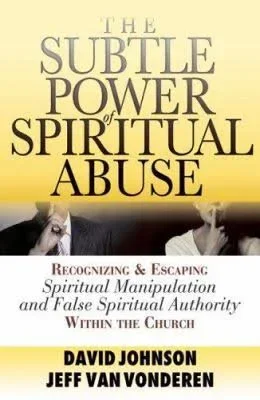
One of the earliest published works on spiritual abuse comes from pastor, David Johnson, and counselor, Jeff Van Vonderen. In 1991, they co-wrote the book The Subtle Power of Spiritual Abuse: Recognizing and escaping spiritual manipulation and false spiritual authority within the church (2). Johnson and Van Vonderen define spiritual abuse as “the mistreatment of a person who is in need of help, support, or greater spiritual empowerment with the result of weakening, undermining, or decreasing that person’s spiritual empowerment.” It’s relevant to note that the person doing the mistreating or the person being mistreated may not realize that’s what is being done. We aren’t making any excuses for abusers, but it is important to acknowledge that the subtlety of spiritual abuse is one reason it is so powerful and dangerous.
Chuck DeGroat
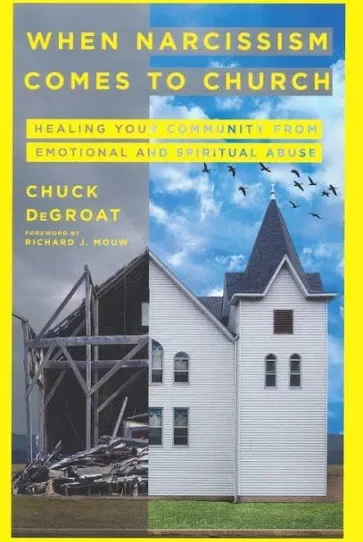
In Chuck DeGroat’s When Narcissism Comes to Church: Healing your community from emotional and spiritual abuse (3), he writes, “In spiritual abuse, principles and maxims of faith are wielded as weapons of command and control, and faith leaders abuse their power for the sake of feeding their own unmet emotional needs.”
Whoa.
I suppose it is appropriate at this point to give a little shout out to the faith leaders reading this blog. First of all, thank you for being here. Secondly, now—like yesterday, now—is the time to locate an educated, licensed mental health professional and do the work to tend to your own unmet emotional needs. The Church is begging you to do this work and safeguard your organization against abuses of all kinds.
David Ward
Pick up nearly any contemporary book on spiritual abuse and you will see references to the work of David Ward. As a trauma therapist based in Brisbane, Australia, Dr. Ward has decades of experience working directly with clients and, since the turn of the century, he has written extensively about cults, trauma, and spiritual abuse. Bless the work of David Ward. The following spiritual abuse descriptions are taken from his article titled “The Lived Experience of Spiritual Abuse” (4).
“Spiritual abuse is a misuse of power in a spiritual context whereby spiritual authority is distorted to the detriment of those under its leadership.”
“Spiritual abuse is a multifaceted and multilayered experience that includes acts of commission and omission, aimed at producing conformity.”
“Spiritual abuse is both process and event, influencing one’s inner and outer worlds and has the potential to affect the biological, psychological, social and spiritual domains of the individual.”
As you can see, we’re getting into a little more nuance now which highlights one of the reasons spiritual abuse is so pervasive and so hard to identify. This is what leaves survivors saying “I thought I was the crazy one.”
Lisa Oakley & Justin Humphreys
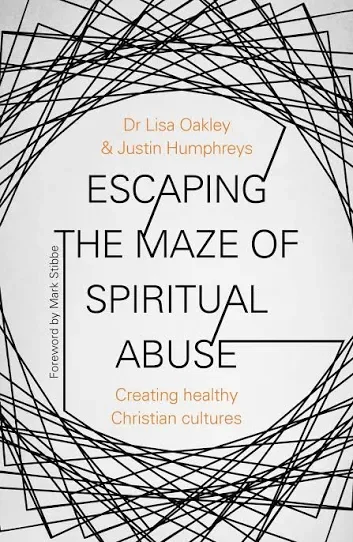
In their book, Escaping the Maze of Spiritual Abuse: Creating healthy Christian cultures (5), researchers Lisa Oakley and Justin Humphreys navigate well the tension of spiritual abuse being both process and event. It helps that Dr. Oakley has collected hundreds (thousands?) of hours of interviews and surveys from spiritual abuse survivors over her career as a UK-based researcher.
“Spiritual abuse is a form of emotional and psychological abuse. It is characterised by a systematic pattern of coercive and controlling behaviour in a religious context. Spiritual abuse can have a deeply damaging impact on those who experience it.
This abuse may include: manipulation and exploitation, enforced accountability, censorship of decision making, requirements for secrecy and silence, coercion to conform, control through the use of sacred texts or teaching, requirement of obedience to the abuser, the suggestion that the abuser has a ‘divine’ position, isolation as a means of punishment, and superiority and elitism.”
Read that again.
Breathe.
You might be realizing right now, in this moment, for the first time, that you have experienced spiritual abuse. Spiritual abuse isn’t just an issue in churches. Spiritual abuse also happens in families, friendships, work places, Bible colleges, book clubs, universities, small groups, and so on. Maybe a Called to Courage Support Group is your next right step.
Karen Roudkovski

At Called to Courage, I find myself recommending Karen Roudkovski’s Understanding Spiritual Abuse: What it is and how to respond (6) most often. Karen’s approach toward this topic is gentle, patient, and wise. Her definition of spiritual abuse is simple enough to digest, but clear and direct enough to be easily understood. She writes, spiritual abuse is “a misuse of power in a spiritual context in which a person or group uses various coercive and manipulative methods of controlling the victim, resulting in the abused individual experiencing spiritual, emotional/psychological, physical, or relational harm.”
We use Karen’s companion text, Spiritual Abuse Recovery Workbook: Engaging faith in healing in our Summit groups. You can learn more about Summit groups here.
I hope these perspectives, descriptions, and definitions of spiritual abuse helped you shape your understanding of this often misunderstood topic. Our social media pages are a good place to see what others are saying as we often post quotes and stories that survivors share with us (with permission, of course).
So, where do we go from here?
Well, that’s really up to you. There is a wealth of information emerging on the subject of spiritual abuse and I encourage you to continue to listen, learn, and reflect. My prayer is that you will continue to engage with Called to Courage as we embolden the broken, empower the voiceless, expose the lies, and exalt the truth. If you want to get more involved with our work, here are some options:
Attend “A Time to Connect” or join a Basecamp or Summit group.
Volunteer. We’re always looking for help with fundraising, administrative tasks, graphics, etc. Send an email to support@called2courage.org and we’ll be in touch soon.
Partner with our mission.
All books referenced in this article are linked on our Books & Music webpage.
Diane Langberg, PhD, Licensed Psychologist - Redeeming Power: Understanding authority and abuse in the church, (pp. 126-127)
David Johnson & Jeff Van Vonderen - The Subtle Power of Spiritual Abuse: Recognizing & escaping spiritual manipulation and false spiritual authority within the church (p. 20)
Chuck DeGroat, PhD, LPC - When Narcissism Comes to Church: Healing your community from emotional and spiritual abuse (p. 125)
David J. Ward, PhD, MPhil (2011). The lived experience of spiritual abuse, Mental Health, Religion & Culture, 14:9, 899-915
Lisa Oakley, PhD & Justin Humphreys, MSc - Escaping the Maze of Spiritual Abuse: Creating healthy Christian cultures, (p.31)
Karen Roudkovski, PhD, LPC-S - Understanding Spiritual Abuse: What it is and how to respond (p. 15)